Are We Collecting Too Much Data and Learning Too Little From It?
Why sport needs to get better at connecting evidence, not just collecting it
“Not everything that can be counted counts, and not everything that counts can be counted.”
William Bruce Cameron, Informal Sociology, 1963
If you work in monitoring, evaluation and learning, it's a warning worth pinning above your desk.
Across sport, measurement has never mattered more. Your board wants assurance. Sport England and your other partners want evidence of value. Your delivery teams want to know what's working. And everyone wants to know how sport contributes to wider social outcomes.
But more demand for evidence doesn't automatically produce more understanding.
After nearly 15 years working alongside governing bodies, clubs and delivery partners, we think sport needs to ask itself an uncomfortable question: are we collecting too much data and learning too little from it?
Sport Is Contributing to Bigger Goals
Governing bodies are best known for developing athletes, supporting clubs, growing participation and governing their sports. But if you work in one, you'll know the brief has widened. You're increasingly expected to demonstrate contributions to health, education, inclusion, employment and community development outcomes too.
This is not simply a claim made within the sport sector. The United Nations recognises sport as “an important enabler of sustainable development” because of its contribution to health, education, social inclusion, gender equality, peace and community development (United Nations 2030 Agenda for Sustainable Development; UN General Assembly Resolution A/RES/79/8, 2024).
The International Olympic Committee’s Olympism365 strategy currently supports more than 550 initiatives across 189 countries, reaching tens of millions of people through programmes linked to health, education and livelihoods, equality and inclusion, safer communities and innovation (IOC Olympism365, 2025).
The core job hasn't gone away, and nor should it. But the questions have changed. It's no longer enough to report how many people took part, how many clubs you supported or how many sessions you delivered. Funders and boards now want to know what changed, for whom, why, and what you've learned.
We see this first-hand in our work with Sport Wales, Swim England, British Blind Sport, Boccia England, Basketball Scotland, England Boxing and British Weight Lifting. Their approaches to monitoring, evaluation and learning look very different. Some focus on participation and delivery. Others are digging into inclusion, behaviour change, research and long-term outcomes.
Yet almost all of them come back to the same question: how do we collect evidence that actually helps us make better decisions?
What Data Can Do, and Where It Stops
Good data is powerful.
It can help organisations understand who takes part, who does not, how patterns change over time, progress against agreed indicators and which questions should be explored next.
Good monitoring creates visibility. It lets you move beyond assumptions and spot patterns that would otherwise stay hidden.
But data has limits.
Data alone can't prove that sport caused a change. It can't fully explain why something happened. It can't replace lived experience, context or professional judgement. And it can't decide what matters most.
The organisations we see getting the most from their evidence treat data as the starting point, not the destination.
Better data should lead to better conversations. Better conversations should lead to better decisions.
Are We Collecting Too Much Data?
Think about everything your organisation collects in a year: attendance figures, demographics, outcomes, surveys, case studies, dashboards, reports.
Much of it is useful. But how much of it does anyone look at again once the report has gone to the funder?
Meanwhile, the clubs and local partners doing the delivery can spend significant time collecting information that never influences a decision. That's time that could have gone into coaching, running sessions or supporting participants.
The problem usually isn't a lack of evidence. It's knowing which evidence genuinely matters.
More isn't automatically better. Collecting less, more consistently, is often worth far more.
So the key question isn't “What else can we collect?” It's “What decisions will this information help us make?”
Shared Goals, Separate Evidence
Here's a question we keep coming back to: is sport learning collectively as quickly as it's measuring individually?
Across many countries, sport organisations contribute to similar policy priorities: health, education, employment, inclusion and community development.
The Sustainable Development Goals provide a shared destination, but not automatically a shared measurement approach (United Nations Sustainable Development Goals).
A governing body may have a clear understanding of its own contribution. A local authority may hold relevant evidence. A health partner may be collecting similar information. Yet those insights are often organised around different programmes, systems and reporting requirements.
This isn't a criticism of funders, policymakers or national agencies, who have invested significant effort in collaboration, place-based working and shared outcomes.
Yet evidence and learning frequently remain tied to organisational boundaries. As a result, sport may generate significant evidence without necessarily building a collective understanding of its wider contribution.
Put simply, sport has become better at collecting information than connecting it.
Who Are We Reaching?
There's another question that deserves more attention: not how many people take part, but who.
Recent Active Lives data from England shows that 64.6% of adults, equivalent to 30.9 million people, achieve recommended physical activity levels. Yet almost a quarter, 24.7%, still do less than 30 minutes of activity per week (Sport England Active Lives Adult Survey 2024-25).
The data also highlights persistent inequalities. Just 53.8% of adults in the least affluent groups are active compared with 73.2% of adults in the most affluent groups. Activity levels are also lower among disabled people and people with long-term health conditions, older adults, women, and Black and Asian adults (Sport England Active Lives Adult Survey 2024-25).
The international picture is equally challenging. The World Health Organization’s latest assessment concludes that global progress towards reducing physical inactivity is off track for 2030 (WHO, Global Levels of Physical Inactivity in Adults, 2024).
So it's worth asking honestly of your own programmes: are they mainly attracting people who are already active? Or are they genuinely reaching people who face the greatest barriers?
If improving health and reducing inequalities are among the intended outcomes, then who we reach matters just as much as how many we reach.
Participation Does Not Always Happen in Clubs
Participation does not always happen where measurement systems expect it to.
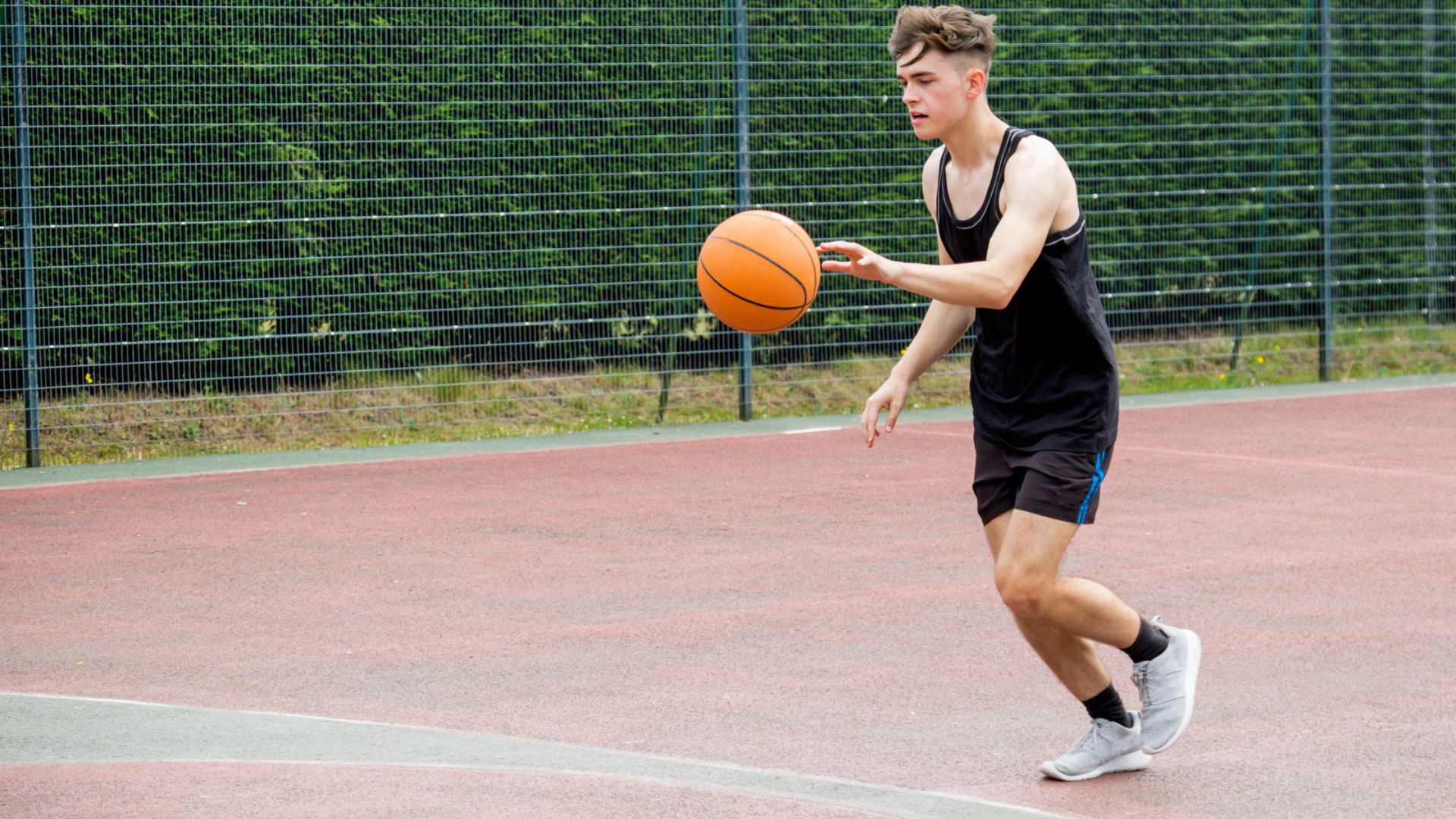
Take basketball. Much of the sport is played informally, on public courts, in parks, playgrounds and community spaces. People can play every week without ever joining a club or appearing in membership data.
The same is likely true across many sports and countries.
This matters because formal participation and total participation are not necessarily the same thing. A measurement system built primarily around memberships and registrations may provide an incomplete picture of how people actually engage with physical activity.
It also raises wider questions about investment. Are we recognising the full contribution of sports that generate substantial informal participation? Are we investing enough in activities that reach people who may never join a traditional club structure?
If the objective is improving activity levels, health outcomes or social inclusion, diversity of sporting opportunities may matter just as much as the scale of any individual sport.
Inclusion Requires Better Evidence Too
The International Paralympic Committee estimates that approximately 1.3 billion people worldwide live with a disability, representing more than 15% of the global population (IPC Impact Strategy, 2025).
The IPC has also identified stronger evidence, research and data infrastructure as priorities for advancing disability inclusion through sport (IPC Impact Strategy, 2025).
Its Impact Insights Catalogue highlights a particularly striking finding: people with disabilities are estimated to be between 16% and 62% less likely to meet physical activity guidelines than people without disabilities (IPC Impact Insights Catalogue, citing The Lancet, 2021).
The catalogue also notes that relevant disability-specific participation and impact data remains limited globally (IPC Impact Insights Catalogue, 2025).
If certain groups remain less visible within our evidence systems, they may also become less visible in strategic conversations and funding decisions.
Measurement Starts Earlier Than Most People Think
Many evidence challenges begin long before anyone fills in a monitoring form.
They begin when funding is designed, when outcomes are defined and when organisations decide what success looks like.
In our experience, the organisations that get this right do a few things early. They take a wider view of outcomes, agree shared goals up front, decide where the evidence will come from, involve delivery partners in designing it, and are realistic about the time and skills collection will demand.
Measurement starts at the funding decision, not the reporting deadline.
The Challenge Is Bigger Than Software
We build software, so you might expect us to say technology is the answer. It isn't, or at least not on its own. Many evidence challenges are structural, not technical.
How can evidence move more easily between systems? How can organisations agree common definitions without forcing identical programmes? How can qualitative insight travel alongside numbers? How can learning be shared rather than locked within individual projects? How can evidence collection remain proportionate and ethical?
One system for everyone is unrealistic. But enough shared structure to support collective learning is achievable.
Turning Local Evidence Into Collective Insight
So the most important question isn't how to collect more data. It's how to connect what we already have.
Across sport, valuable evidence is being generated every day about health, education, employability, disability inclusion and stronger communities.
Yet much of that learning remains tied to individual programmes, organisations and reporting frameworks.
If sport is serious about demonstrating its wider contribution to society, the next step isn't collecting more data. It's finding better ways to learn from what already exists.
Not by forcing everyone onto the same platform. Not by creating a single framework. Not by expecting every programme to measure the same things.
But by creating enough shared understanding to connect local evidence with wider learning.
Because the goal is not data collection.
The goal is collective insight.
Where does your organisation sit? If you'd like to talk through which of your data is earning its keep, and which isn't, we'd be glad to compare notes.